

Oct 19, 2026
What Should Be Photographed and Documented During a Property Snagging Inspection
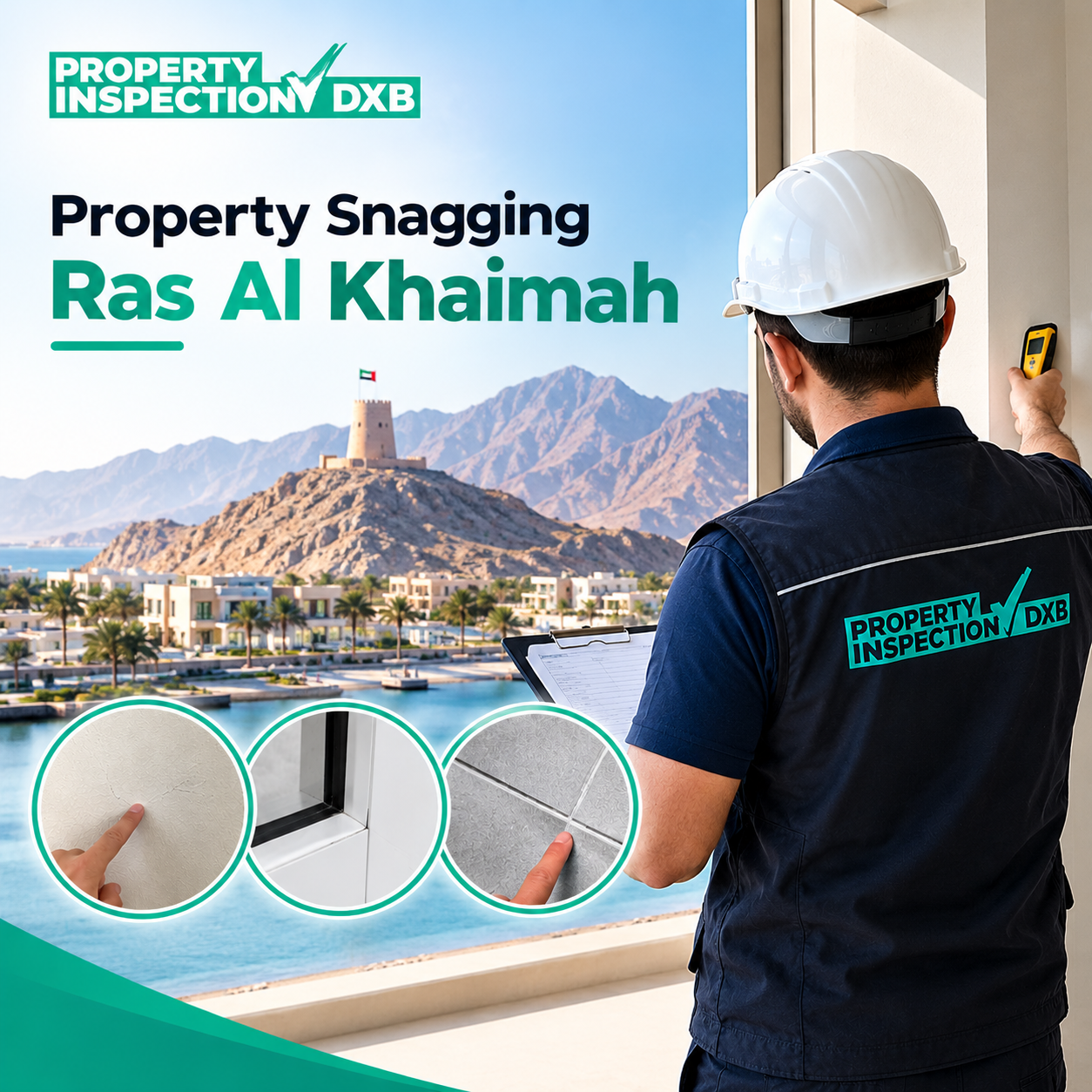
A snag can only be proven with evidence; otherwise, it can cause disputes with the developer. Either photographs or notes turn a vague concern into a repair order that cannot be ignored. In this blog, we will understand what exactly a professional inspector captures and why every piece of information is so significant when it comes to property snagging in Ras Al Khaimah.
Snag Defined: The Records That Make a Defect Count
Snag refers to deficiencies, outstanding actions, and any divergence from the stipulated parameters that are indicated prior to or immediately following the handover. The pictures and notes attached to the snag provide the non-ambiguity of each aspect of the snag for contractor’s use.
Wide shot first
Experienced inspectors take images of the whole room before taking close-up pictures. This way, the developer knows exactly which wall, door, or fixture is involved and does not have to guess the problem or come for a second visit.
Close-up second
A photograph taken at a close range shows the actual fault, its size, and the extent of the issue. Use of a coin or a ruler allows them to measure the snag based on the image.
Labelled and logged
Each picture corresponds to the report with unit numbers, room numbers, and items included. The picture without a label will force you to find the exact issue later.
Snagging Process in Ras Al Khaimah: The Documentation Stage
What does the baseline record consist of? It is a group of documents that makes it possible to evaluate a property. Without this reference, the inspector is not able to evaluate the promised accuracy and therefore can only comment on the defects sighted.
Plans for the construction and specifications: Specialists measure what has been accomplished against the approved plans and brochures. The absence of items such as fitted wardrobes, and the lower grade of the tiles used in the property would be considered factual deviations instead of opinions.
Handover information: Including the unit number, date of the inspection, and weather conditions in the document is crucial. For instance, moisture readings and paint cracks behave differently when the weather is rainy, so all findings during the inspection must be explained in context.
Reading of meters and keys: Documenting the electricity and water meters, as well as the number of keys and passes, is essential for disputing the use of utilities and the absence of the items after the handover.
Structure and Finishes: Evidence Worth Capturing on Camera
What does it mean by a structural or finish defect?
It is anything affecting the fundamental fabric of the building, including walls, ceilings, floors, and joinery.
Cracking and hollow spots: Inspectors take photographs that show every crack with a measuring device in place and knock on tiles in those areas. This is useful for an engineer or other interested party to note length and direction that attempts to calculate if such a crack is in the category of cosmetic and deeper.
Paint and plaster: Light raking across the surface shows patchily applied coats, roller marks, and uneven plaster. Angled shots expose various things that are often hidden due to flat daylight.
Doors, windows, and other joinery: The inspector photographs any gaps, misaligned frames, and scratched glass. The inspector also notes whether all locks, handles, and hinges work properly, as functionality is equally vital as aesthetics.
The Wet Zone Files: Kitchens, Bathrooms, and Hidden Moisture
A wet zone is an area subjected to continuous exposure to water, which makes the small damage costly to repair.
Moisture meter readings: It is important to document and photograph the readings obtained from walls, ceilings, and floors adjacent to plumbing to back up the inspector’s claim that the wall was damp.
Tests for waterproofing and drainage: The inspector turns taps and showers on to take photos of already accumulated puddles, slow drainage, and possible leaks under basins.
Silicone and grout lines: Separate cracked grout and gaps in sealants are photographed at close-up distance.
Systems on Record: Electrical, AC, and Safety Checks
It is to test the functionality of everything that runs on power or carries air and water.
Sockets and switches: Electricians will test every plug using a testing device and take photos for documentation purposes. Moreover, they will annotate the condition of all plugs around the house so they have a clear starting point.
Air conditioning performance: Inspectors will review airflow, cooling effectiveness, and any water dripping from the air conditioning units. A very useful brief video that shows the unit making noise or leaking water may speak more than any amount of text.
Safety devices: Smoke detectors, breakers, and distribution boards are photographed and labeled. Issues are noted in this regard if some labels are missing or wires are exposed in the panel.
Outdoors and Common Areas: Do Not Skip the Edges
These are defects found on balconies, façades, parking spaces, and shared amenities that belong to the unit or affect it.
Balconies as well as railings: The inspectors inspect tile heights, drainage points, and the stability of the railing. Following that, they proceed to take photos of any rust and movement. Keep in mind that bad drainage on a balcony might create stains on the apartment below.
Parking and storage: The bay number, markings, and any kind of storage are photographed, thus supporting the sales contracts.
Facade as well as roof access: Where possible, the state of cracks, fallen cladding, and sealant failures are photographed from a distance. With the help of zoomed photographs, the developers do not have to climb but still get the job done.
Final Word
The day of handover passed quickly and memories fade when the list of defects grows. Well-taken photos, precise measurements, and meticulous notes guarantee a solid position when it comes to repairs. If you are going to purchase property, select the right team that records all of the faults. Well done, property snagging in Ras Al Khaimah saves you money and provides you with peace of mind in the long run.
FAQs
How many images do I get from snagging inspections?
Usually there are several hundred images taken during such inspections. Inspectors prefer quality above all and take wide-angle shots and close-up photos of the defect that has been found.
Can I take pictures during the inspection process?
You can take your own photos, but those taken by professionals will definitely have more value. However, your own photos can always serve as a backup.
Can videos replace photos during inspection?
Video will be useful for things such as leaks, noise, and stuck doors, while still images will be better for report purposes, as they may be numbered and marked according to the issues found.
What is the meaning of placing a coin or a ruler next to a defect?
It shows the true size of the issue. A crack may not be as big as it looks in the picture, while the developer would take the request more seriously when they see the exact measurements.
How long should snagging records be kept for?
At least for the entire duration of the liability period. Original files and reports could be necessary if some issues return.

