

Oct 07, 2026
Waterproofing Snagging: How Can Experts Help Buyers Detect Hidden Moisture Problems?
A fresh coat of paint can hide a lot of things in new properties! Homebuyers see an immaculate house when they first visit but discover moisture problems after they move in. Much later in the process, you have to deal with messy repairs and disputes over accountability.
A property snagging expert allows you to discover moisture issues before moving in, when the builder can still fix the problems without costing you anything. In this blog, we clarify how professionals discover moisture that can’t be detected with the naked eye.
Property Snagging 101: Why Moisture Hides in New Homes
Waterproofing snagging is the part of a snagging inspection that detects leaks, moisture, and potential weak seals in a newly constructed property. Professionals check the surfaces, joints, and drainage systems to ensure that there are no traces of water where it shouldn't be prior to completing the handover. Improperly performed finishing, poor sealing of joints, and blocked drainage systems can let water through even when everything seems fine.
Property Snagging Tools That See What Naked Eyes Miss
Moisture Meters Check the Levels
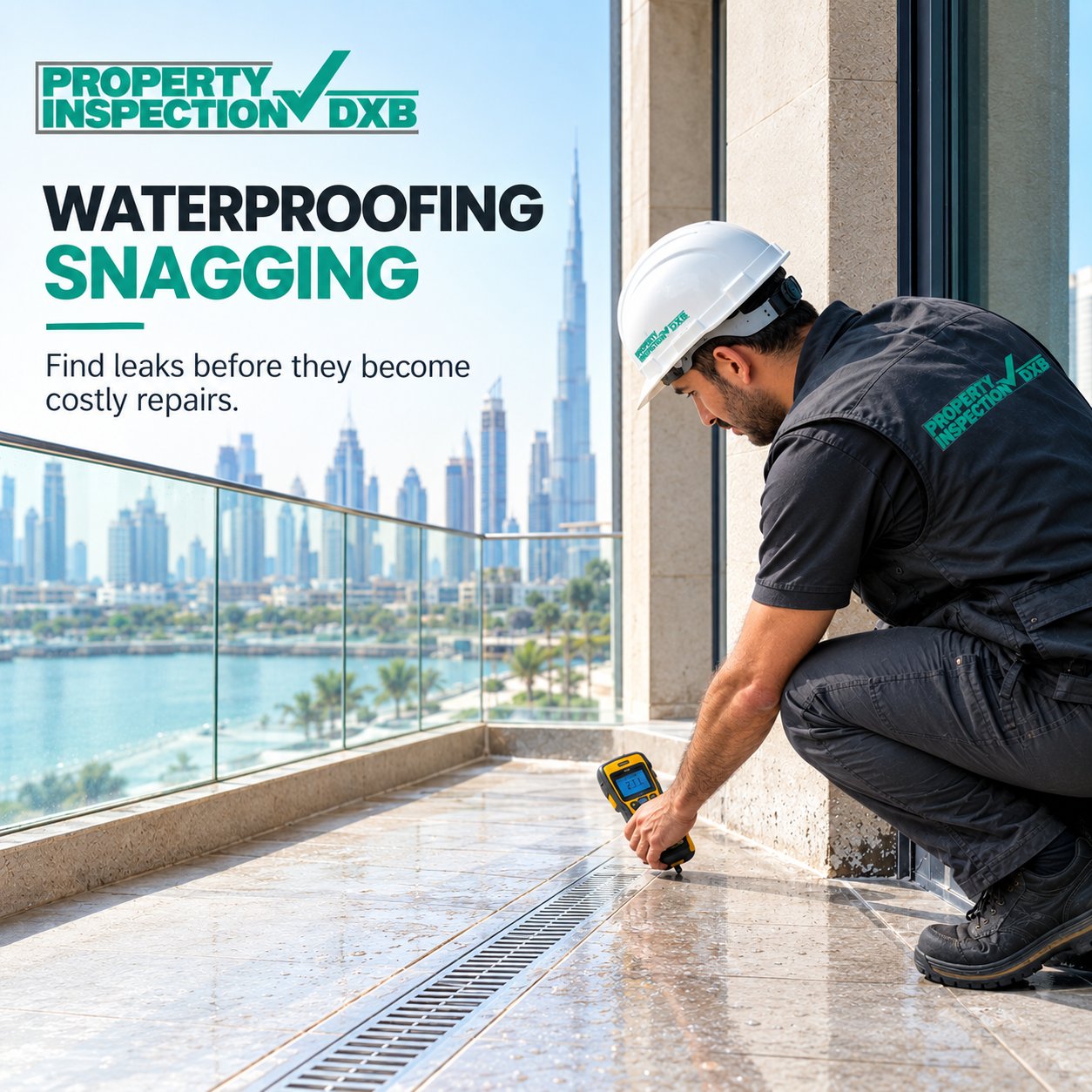
Moisture meters are able to measure the moisture in the material of the walls, floors, and ceilings without having to use a drill. Inspections are carried out, and the device is used to take readings in different parts of the room. In case of finding a spot with a high reading, the inspector must investigate the cause of the spike before completing the inspection.
Thermal Cameras Identify Temperature Changes
Thermal imaging technology is used to build thermal images, which help in identifying the areas that need to be checked further. However, experts strongly advise against relying only on thermal images and recommend using more elaborate methods to confirm the findings.
Some Basic Physical Procedures are Allowed
Some methods might be simple and do not require special tools but rather training and patience. The best tests to conduct are the following:
- Listening to the tiling for hollow sounds
- Watching how water flows
- Seeing if the balcony is sloped enough
From Hotspots to Handover: Property Snagging Step by Step
Wet Rooms First
Kitchen and both rooms of a property experience daily moisture exposure, which is why inspectors investigate the areas around bathtubs, shower trays, faucets, and floor drains. They pay close attention to any failed sealants, loose tiles, discolored ceilings underneath, and poor drainage slopes.
The Care of Balconies, Roofs, and Windows
Water and wind hit the outer edges of every house. Inspectors examine the balcony floor for proper slope, the roof for any cracks or stagnant water, and the windows for any gaps and spots. Even a tiny gap allows rainwater to reach the inside walls of the house during a rainstorm.
Request Detailed Report That Covers All Aspects
A proper report does not leave your builder any chance to make assumptions, and follow-up inspections confirm that the repairs have taken place. Every report must include:
- An image of each defect
- Exact room and place
- Moisture readings and testing methods
- Action to be taken by the builder
Recheck Before Taking Possession
Once the repairs are completed, ask for a follow-up visit. A fresh coat of paint can conceal a leak that is there, so inspectors must measure moisture in the same area at those places again. Only accept the completed construction once moisture readings are normal and no more signs of damage appear.
Closing Notes
Moisture behind walls often makes its presence known on the day of handing over. A thorough check of any property can solve this problem, using modern equipment, thermal imaging technology, and physical approaches to determine what’s behind the walls. Book an appointment for property snagging as the keys are handed over to you, ask for the report, and demand another inspection after the repairs are made. Keep in mind that a few hours of the inspection process will spare you from a lot of trouble in the months to come.
FAQs
Can new paint conceal moisture at the time of inspection?
Yes, it can mask stains for an untrained eye! This is why inspectors will check moisture with the help of moisture meters and thermal imaging, rather than relying only on the exterior appearance of the walls.
Do I have to be present at my house during the inspection?
It can be beneficial since your presence will allow you to ask questions and see all necessary information yourself.
How long will the moisture check take for a new property?
The time depends on the house’s size; for example, it might take a few hours for a small apartment, while larger villas can take an entire day.
What should I do if my builder doesn’t pay any attention to my report?
The key is to have it documented and keep records of your correspondence with the builder.
Is seeing a water stain always alarming?
Not necessarily. Stains can result from older spills or condensation. However, it is important to test all stains to find the real cause.

