

Aug 20, 2025
DIY Snagging vs Professional Snagging: Pros and Cons
Buying a new home is one of the biggest investments you will ever make. While developers promise quality construction, it’s common for new builds to have defects ranging from minor cosmetic issues to serious safety risks. That’s where snagging inspections come in.
But here’s the big question: Should you do snagging yourself (DIY) or hire a professional inspector?
This article compares DIY snagging vs professional snagging, weighing the pros and cons of each option, so you can make an informed decision that safeguards your property and finances.
What Is Snagging?
Snagging is the process of identifying defects, unfinished work, or substandard construction in a new-build property. These defects are listed in a “snagging report” and submitted to the developer for rectification.
Snagging can be:
-
DIY snagging – where the homeowner checks the property themselves.
-
Professional snagging – where a qualified inspector carries out the inspection.
Both methods have advantages and drawbacks, and the choice depends on your budget, expertise, and risk tolerance.
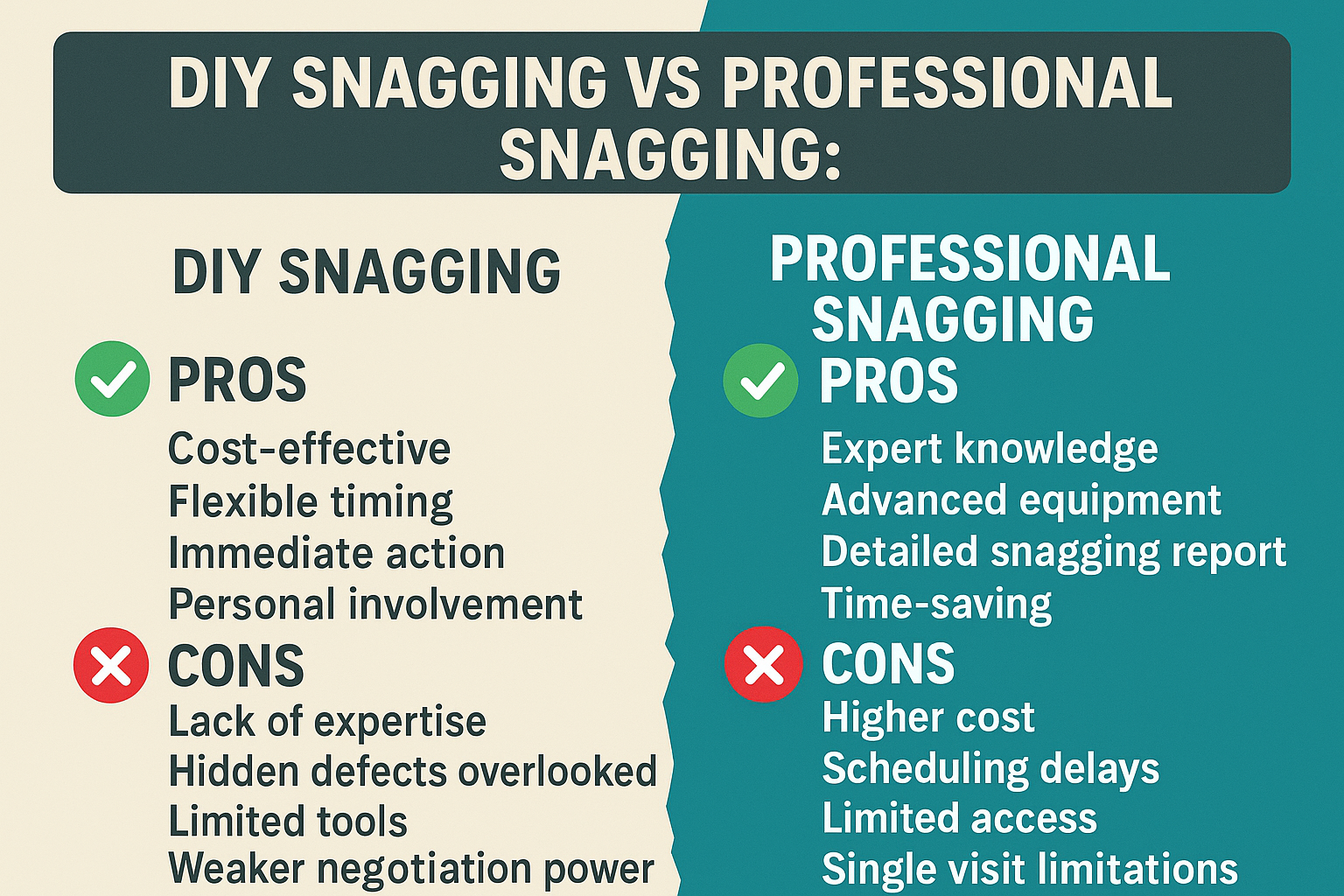
DIY Snagging: Pros and Cons
✅ Pros of DIY Snagging
-
Cost-Effective
-
You save on inspection fees, which can range from a few hundred to over a thousand dollars, depending on property size.
-
-
Flexible Timing
-
You can inspect at your own pace without waiting for an appointment.
-
-
Immediate Action
-
You can spot obvious issues like chipped paint, loose tiles, or broken fittings instantly.
-
-
Personal Involvement
-
You know your property best and can focus on details that matter most to you.
-
❌ Cons of DIY Snagging
-
Lack of Expertise
-
Most homeowners lack knowledge of construction standards, wiring safety, plumbing systems, and structural integrity.
-
-
Hidden Defects Overlooked
-
Issues like poor insulation, moisture intrusion, or faulty electrics may go unnoticed.
-
-
Limited Tools
-
Without specialist tools (thermal cameras, moisture meters, circuit testers), detecting hidden problems is difficult.
-
-
Weaker Negotiation Power
-
Developers may not take a DIY snagging list as seriously as a professional report, making it harder to enforce repairs.
-
Professional Snagging: Pros and Cons
✅ Pros of Professional Snagging
-
Expert Knowledge
-
Inspectors are trained to spot defects according to building codes and industry standards.
-
-
Advanced Equipment
-
Professionals use tools like infrared cameras, moisture detectors, and electrical testers to detect hidden problems.
-
-
Detailed Snagging Report
-
A structured, photographic, and legally recognized report strengthens your case when dealing with developers.
-
-
Time-Saving
-
Inspections usually take 2–4 hours, and you don’t have to spend days checking every detail.
-
-
Stronger Negotiation
-
Developers are more likely to act quickly on defects highlighted by a professional report.
-
❌ Cons of Professional Snagging
-
Higher Cost
-
Professional inspections can be expensive, especially for larger homes or multiple inspections.
-
-
Scheduling Delays
-
You may need to wait days or weeks for an appointment, which can delay your defect-reporting timeline.
-
-
Limited Access
-
Some developers may restrict pre-handover inspections, making it harder to get a professional inspector inside early.
-
-
Single Visit Limitations
-
If defects appear later (after occupancy), you may need another paid inspection.
-
DIY vs Professional Snagging: Which Is Right for You?
Choose DIY Snagging if:
-
You are on a tight budget.
-
You have construction knowledge or past experience with property inspections.
-
You only want to identify obvious or cosmetic issues.
Choose Professional Snagging if:
-
You want peace of mind and legal protection.
-
You are investing in a high-value property.
-
You want to uncover hidden or complex defects.
-
You want stronger leverage against the developer.
👉 Best Practice: Many homeowners choose a hybrid approach—conducting a basic DIY snagging checklist first, then hiring a professional for a final, detailed inspection before warranty expiry.
Real-Life Examples
-
DIY Case: A buyer identified paint issues and uneven flooring but missed faulty wiring. Months later, electrical repairs cost thousands—expenses that could have been covered by the developer.
-
Professional Case: An inspector discovered plumbing leaks behind walls and improper insulation. The developer fixed these at no cost to the buyer, saving significant long-term expenses.
Cost Comparison: DIY vs Professional Snagging
| Factor | DIY Snagging | Professional Snagging |
|---|---|---|
| Cost | Free | $300–$1000+ |
| Expertise | Low | High |
| Tools | Basic | Advanced (thermal, moisture, etc.) |
| Defect Detection | Surface-level | Surface + hidden |
| Credibility | Lower | Higher with developers |
| Time Investment | High | Low (2–4 hours) |
Expert Tips for Homeowners
-
Use a snagging checklist – Even for DIY, follow a structured list (paint, doors, plumbing, electrics, safety).
-
Time it wisely – Ideally book inspections before handover or just before warranty expiry.
-
Document everything – Take photos and videos of defects.
-
Don’t rely only on eyesight – Hidden issues require proper testing tools.
-
Consider a two-step approach – Do your own first, then hire a professional for a final review.
Conclusion
When it comes to DIY snagging vs professional snagging, both have value—but the right choice depends on your budget, expertise, and risk appetite.
-
DIY snagging is budget-friendly but limited.
-
Professional snagging offers expertise, tools, and credibility, ensuring no hidden issues are missed.
👉 Final Recommendation: For maximum protection, combine both. Do a personal snagging check for obvious issues, then hire a professional before your warranty expires. This way, you get the best of both worlds—cost savings and expert assurance.
FAQ: DIY vs Professional Snagging
Q1: Is DIY snagging enough for a new home?
DIY snagging can catch obvious issues, but without expert tools and knowledge, hidden problems often go undetected.
Q2: How much does a professional snagging inspection cost?
Costs vary depending on property size but typically range from $300–$1000+.
Q3: Do I need both DIY and professional snagging?
Yes, many experts recommend doing both. DIY helps spot quick issues, while professional snagging ensures deeper inspections.
Q4: Can developers reject a DIY snagging list?
They cannot reject it outright, but a professional report carries more weight and credibility.
Q5: When is the best time for a professional snagging inspection?
Ideally before handover or just before the warranty period expires.

